





Konstruktionsprinzipien:
Flexible and individual Special cables
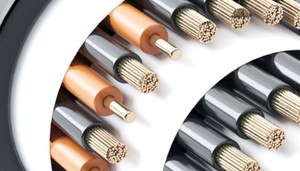
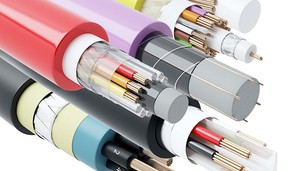
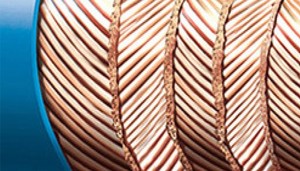
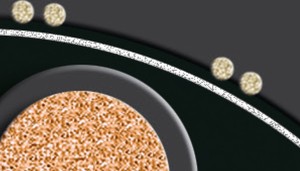
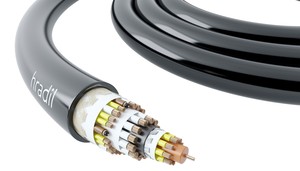
Our engineering know-how is hidden away in the cable core of our Special cables. The best possible combination of braiding, cable type, shielding, banding, braid, stranding and insulation is what distinguishes an innovative Special cable. Within just a few weeks of completing the requirement analysis we will have constructed your customised Special cable, whatever the application – with customised printing at your request.
Thermoplastics
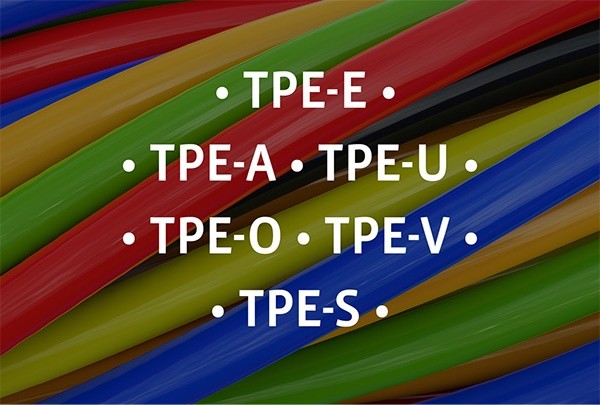
Thermoplastics are the most widely used synthetic materials in cable construction.
PVC (polyvinyl chloride)
We use more than 50 formulations for different PVC-P blends in the production of our special cables. Depending on the individual application, we add plasticisers to the PVC to modify its degree of hardness (Shore A hardness). A disadvantage of PVC is its high dielectric loss factor and the large amount of corrosive gas fumes emitted in the event of fire.
PE (polyethylene)
PP (polypropylene)
PA (polyamide)
Fluoropolymers
Thermoplastic fluoropolymers have excellent chemical and thermal properties as well as very good insulation properties. However, material and processing costs are high. It must be said that material and processing costs are high.
Examples of fluoropolymers are:
PTFE (polytetrafluoroethylene)
Due to its good electrical, thermal and mechanical characteristics, PTFE is used for the insulation of very thin walls, in particular in aircraft engineering and rocket technology.
PVDF (polyvinylidene fluoride)
Of all the fluoropolymers PVDF has the best cost/performance ratio.
ETFE (ethylene tetrafluoropropylene)
The operating temperatures of ETFE are far better than PVDF, lying in the range of
-65° to +180°C.
FEP (fluorinated ethylene propylene)
Although on the whole FEP has the best properties of all the fluoropolymers, it is also the most expensive.
PFA (tetrafluoropropene perfluorpropylvinylether)
Due to certain specific properties, PFA can be used for even more extreme applications than FEP.
