




Konstruktionsprinzipien:
Flexible and individual Special cables
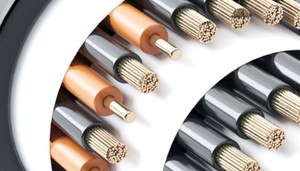
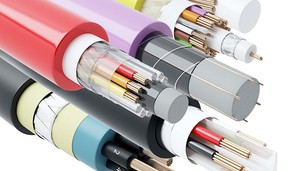
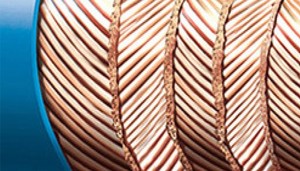
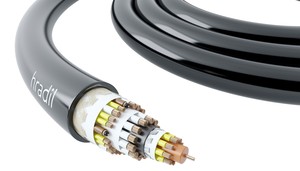
Our engineering know-how is hidden away in the cable core of our Special cables. The best possible combination of braiding, cable type, shielding, banding, braid, stranding and insulation is what distinguishes an innovative Special cable. Within just a few weeks of completing the requirement analysis we will have constructed your customised Special cable, whatever the application – with customised printing at your request.
Thermoplastic elastomers
Thermoplastic elastomers (TPE) combine the positive use properties of elastomers with the good processing properties of thermoplastics. Both these materials can be synthesized to create so-called block copolymers, poly-blends or block polymers.
Thermoplastic elastomers are frequently referred to as TPR, thermoplastic rubber. A familiar brand name for polyester-based elastomers is DuPont’s HYTREL®.
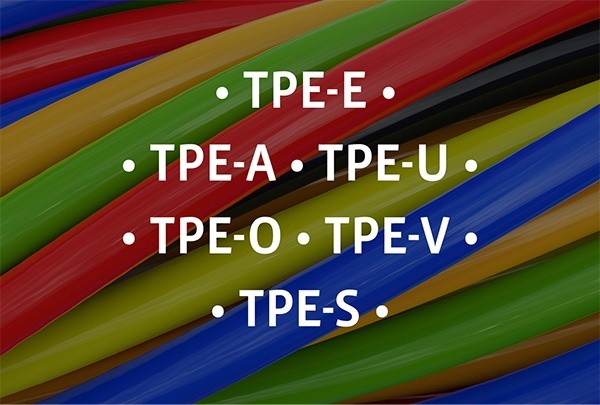
These are the better known thermoplastic elastomers:
TPE-E (thermoplastic polyester elastomer)
TPE-A (thermoplastic polyamide elastomer)
TPE-U (thermoplastic polyurethane elastomer, PUR)
TPE-O and TPE-V (thermoplastic polyolefin elastomer)
TPE-S (thermoplastic polystyrene elastomer)
TPE-E
Thermoplastic polyester elastomers can be manufactured in varying forms from soft to rigid. By altering the share of plasticizer (such as polyalkene glycol ether) you can obtain a Shore hardness range of between D 38 and D 74. TPE-E’s useful temperature range is between 40° and 120° Celsius. It is frequently selected for cable manufacturing due to its excellent performance under dynamic loading. TPE-E’s high resistance to flexural loading and its impact strength are also crucial factors in its favor. It is also resistant to chemicals, oils and solvents.
TPE-A
Thermoplastic polyamide elastomer is similar to TPE-E since it also has good mechanical and chemical properties but it has the added advantage of a higher resistance to acidic and basic environments.
