



Konstruktionsprinzipien:
Flexible and individual Special cables
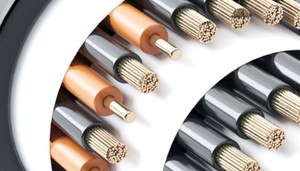
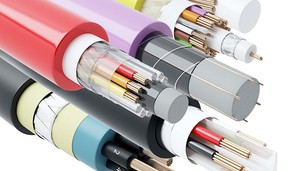
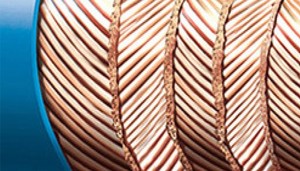
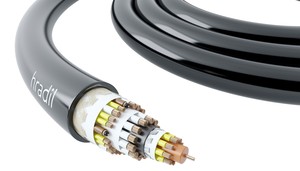
Our engineering know-how is hidden away in the cable core of our Special cables. The best possible combination of braiding, cable type, shielding, banding, braid, stranding and insulation is what distinguishes an innovative Special cable. Within just a few weeks of completing the requirement analysis we will have constructed your customised Special cable, whatever the application – with customised printing at your request.
Stranding
The stranding of the cable construction elements also depends on the specific application for which the cable is intended. Our cable production facility uses several widely differing stranding machines.
We differentiate between three stranding techniques: pair, layer and bundle stranding.
Pair stranding
This is the simplest stranding method, using a pair of conductors to create a new strand.
Layer stranding
A maximum of five separate elements can be stranded together in a simple circular pattern. If more than five elements are involved, they have to be stranded in several layers. Layer stranding involves varying lay lengths and directions of lay, depending on the application involved. It is also possible to create a conductor assembly with different lay directions within a single cable.
